
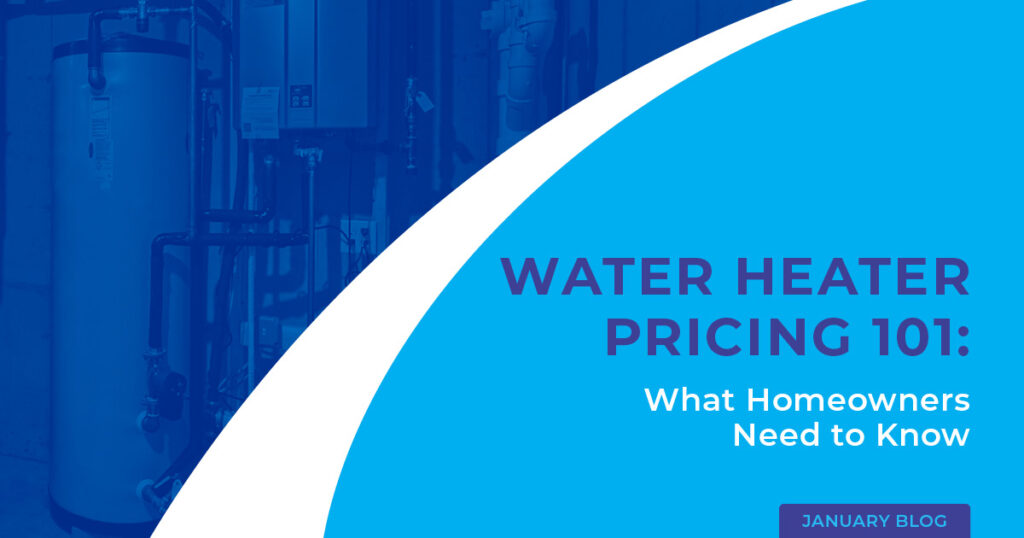
A helpful breakdown of like‑for‑like replacements, upgrades, and conversions.
When your water heater starts showing signs of age or fails completely, one of the first questions that comes to mind is: what will a new water heater cost me? It’s a question homeowners and property managers ask frequently, and for good reason. A water heater is a necessity for any home or building and essential for providing hot water for showers, dishwashing, laundry, and other countless daily tasks. When it needs to be replaced, the financial impact can be significant.
You may think that understanding water heater costs is as straightforward as looking up a single price tag. However, the total expense can vary considerably based on several factors including the type of water heater you choose, its size and capacity, the complexity of the installation, and your location. In this article, we will provide general estimates designed to give you a ballpark figure for budgeting purposes, but your actual costs may differ based on your specific circumstances. Local labor rates, permit requirements, and unique installation challenges at your property can all influence the final price.
What Affects the Costs of Replacing a Water Heater?
There are several things to consider when determining how much you’ll spend on a new water heater. Understanding these variables will help you make an informed decision and prepare for the costs to come.
2. Additional Piping and Infrastructure: Beyond the water heater unit itself, your installation may require updates to existing plumbing. Older homes might need new supply lines, expansion tanks, pressure relief valves, or drain pans. If your current setup doesn’t meet modern building codes, bringing everything up to standard will add to your total cost. The condition and configuration of your existing plumbing infrastructure plays a significant role in determining these additional expenses.
3. Like-for-Like vs. Changing to a Different Type: One of the most significant cost variables is whether you’re replacing your water heater with the same type (a like-for-like replacement) or switching to a different system. Like-for-like replacements are generally more straightforward and less expensive because the existing infrastructure—gas lines, venting, electrical connections, and water lines—can often be reused with minimal modifications. When you change types, however, the project becomes more complex and costly, as we’ll explore in greater detail later.
How Much Does A Like-for-Like Replacement Costs?
When replacing your water heater with the same type and capacity, you can expect more predictable pricing. Here are the typical cost ranges for common like-for-like replacements:
Keep in mind that these estimates are based on standard installation conditions without any major issues. Other factors that can impact the cost include difficult access, the need for multiple technicians, or the discovery of code violations.
Switching to a Different Water Heater Type
Changing from one type of water heater to another like a traditional gas tank to a tankless system, or from electric to gas, typically costs considerably more than a like-for-like replacement. The reason for the increased cost is due to modification of the system infrastructure.
For example, if a homeowner wants to switch from a traditional gas tank water heater to a gas tankless model, the tankless unit would more than likely require a different size gas line, different venting, and possibly electrical work. Some tankless installations also require moving the water heater to a different part of the house where proper venting is feasible. Each of these changes adds labor hours and materials costs.
Converting from electric to gas comes with even more challenges. A new gas line will need to be installed in addition to proper venting, and a modification to your electrical system may be required as well. These major changes can significantly increase the overall cost.
Before committing to a different type of water heater, it’s best to have a qualified professional look at your home’s specific needs so you can choose the right system that meets your budget and expectations.
With so many variables, understanding overall water heater costs involves more than just choosing a system type. While like-for-like systems are less complicated and costly, you must also consider your household needs and circumstances. Investing in an upgrade or modification of your system, even with higher costs, may be the best solution or long-term value and performance.
Remember that the estimates provided in this article should be used as a general guide and are based on common scenarios. Your actual costs may be higher or lower depending on your specific circumstances, local market conditions, permit fees, and the particular challenges your installation presents.
When you’re ready to move forward with replacing your water heater, our experienced technicians can assess your current setup, discuss your hot water needs, and provide you with a quote specifically for your situation. Contact Blue Chip Plumbing here or give us a call today at (513) 999-6820 to learn more.
Questions & Answers
How much does it typically cost to replace a water heater?
Water heater replacement costs vary based on the type and size of the unit and the complexity of the installation. In general, homeowners can expect to pay between $2,000 and $3,000 for a standard 50‑gallon gas or electric like‑for‑like replacement. Larger or more advanced systems, such as hybrid or tankless water heaters, can cost significantly more.
What factors have the biggest impact on water heater pricing?
The biggest cost drivers include the type of water heater, its capacity, and whether the replacement is like‑for‑like or a system change. Additional factors such as plumbing upgrades, venting requirements, electrical or gas line modifications, home access, and local permit requirements can all influence the final price.
Is a like‑for‑like water heater replacement the most affordable option?
Yes. Like‑for‑like replacements are generally the most cost‑effective because they use your home’s existing infrastructure, such as gas lines, venting, electrical connections, and water piping. This reduces labor time and avoids the added expense of system modifications.
Why does switching to a tankless or different type of water heater cost more?
Changing from one type of water heater to another often requires new gas lines, venting, electrical upgrades, or relocation of the unit. These infrastructure changes increase labor hours and material costs, which is why upgrades and conversions are typically more expensive than like‑for‑like replacements.
How do I know which water heater is right for my home?
Choosing the right water heater depends on your household’s hot water demand, available utilities, space constraints, budget, and long‑term efficiency goals. A professional evaluation is the best way to determine the most practical and cost‑effective option for your home.

Sign up for deals and exclusive offers.
1950 Waycross Road
Cincinnati, OH 45240
Follow us
Sign up for deals and exclusive offers.
1950 Waycross Road Cincinnati, OH 45240
Copyright 2025 Blue Chip Plumbing
Follow us
Sign up for deals and exclusive offers.
1950 Waycross Road Cincinnati, OH 45240
Copyright 2025 Blue Chip Plumbing
Follow us
Get the help you need fast!
Choose from the following options