
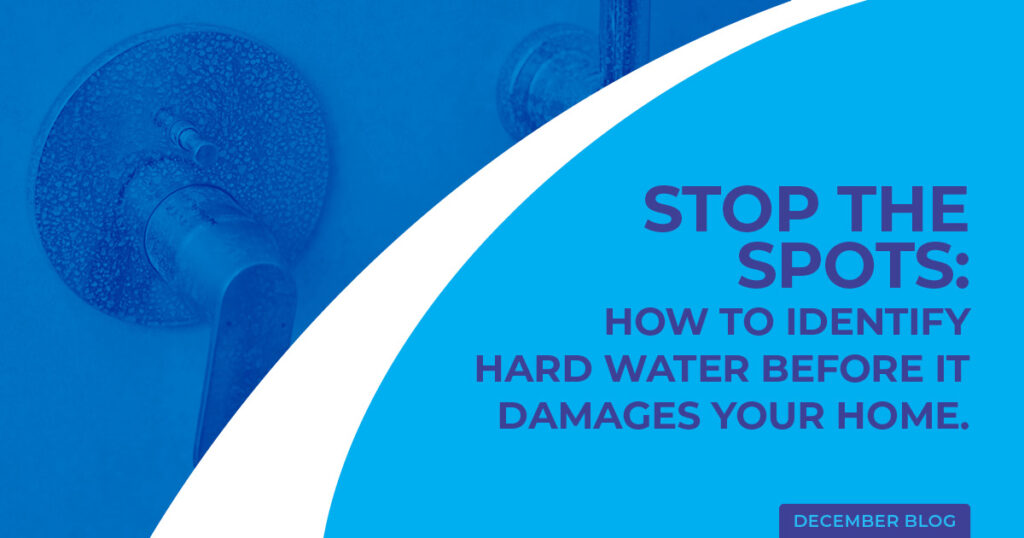
The hidden costs of hard water and the telltale signs that it exists.
Have you ever noticed a white, chalky buildup on your faucets? Or you struggle to get soap to lather? Or maybe you have noticed spots on your dishes after washing them. If so, you might be dealing with hard water. While hard water isn’t necessarily dangerous, it can wreak havoc on your plumbing, appliances, and wallet. Let’s explore what hard water is, how to identify it, and why a water softener might be the solution for your home.
Understanding hard water and its cause.
In simple terms, hard water is water that contains high levels of dissolved minerals, which mostly includes calcium and magnesium. These minerals aren’t harmful to drink, but they can create significant problems throughout your home. The hardness of water is typically measured in grains per gallon (GPG). Anything over 10 grains per gallon is considered very hard water. Water provided by Greater Cincinnati Water Works is typically around 12 grains per gallon. Some of the surrounding areas are well above 20 grains per gallon.
If you are wondering how some homes may have issues with hard water while others do not, the answer is in your surroundings. The minerals in hard water come from the geological formations the water passes through before reaching your home. Areas that have chalk, limestone, and gypsum deposits tend to have harder water than regions with granite or sandstone bedrock.
How do you know if hard water exists?
Identifying hard water is relatively straightforward. You can start in the bathroom or kitchen and look for white, crusty deposits around your faucets or showerheads. These white mineral deposits are a telltale sign of hard water. You should also check your glassware and dishes. If you consistently see spots that don’t rinse away after they come out of the dishwasher, hard water is likely the culprit.
Another thing to look for is whether or not your soap and shampoo lathers well, or if your skin and hair feel sticky after showering. Your laundry might also appear dingy despite using plenty of detergent, and you could see stiff, faded clothes coming out of the washer.
While these are signs to look for, to get a definitive answer you can purchase an inexpensive water hardness test kit from any hardware store or contact your local water district. Many water municipalities provide free water quality reports that include hardness levels. If you’re on a well, you’ll definitely want to have your water tested professionally.
Why does hard water matter?
Having hard water goes far beyond cosmetic annoyances. It can impact your wallet, plumbing, and appliances in the following ways:
What is a water softener?
A water softener is a system designed to transform hard water into soft water through various methods, the most common being the removal of minerals. The result is water that lathers better, cleans more effectively, and is gentler on your appliances. There are several different types of water softeners to choose from, including:
The benefits of water softeners and how to choose the right one.
Investing in a water softener for your home has a variety of advantages. You’ll immediately see improvements in how your clothes feel, how your skin looks and feels, and how well your soap lathers. Your appliances will operate more efficiently, which results in lower energy bills and replacement costs.
Choosing the right system depends on several things. First, have your water hardness level checked through a professional if possible. Next, determine how much water your household uses on average in a day. A family of four typically uses 80-100 gallons per person per day. The system’s capacity, measured in grains per gallon (GPG), should match your household’s needs.
You will then need to consider your available space since softeners require a dedicated space near your main water line, typically in a basement, garage, or utility room. You’ll also need access to a drain for the regeneration process. Budget is another important factor, as systems range from $500 to $2,500 installed, depending on type and capacity.
Research your options carefully and read reviews. Reputable brands usually provide better warranties and customer support.
Installation: DIY or Professional?
While some homeowners might install a simple water softener themselves, professional installation is generally recommended. Improper installation can void warranties, compromise system performance, and potentially create plumbing issues. A professional ensures your system is properly connected to your main water line, that a bypass valve is installed correctly, and that drain connections meet local plumbing codes.
Unless you have significant plumbing experience, hiring a professional is worth the investment and provides peace of mind that your system will function properly for years to come.
The importance of maintenance for longevity.
After installing your new water softener, conducting proper maintenance is important to maintain its performance and longevity. Here are a few maintenance tasks that you need to be aware of:
With the right maintenance, a quality water softener can last 15-20 years or longer. Some systems can last as long as 25 years. This impressive lifespan, combined with the savings on appliances and products, makes a water softener a smart investment for any household with hard water.
If you are experiencing issues caused by hard water like the ones mentioned above, contact Blue Chip Plumbing here or give us a call today at (513) 999-6820 to get more information or a free quote.
Questions & Answers
What is hard water and why does it occur?
Answer: Hard water contains high levels of dissolved minerals, mainly calcium and magnesium. These minerals come from geological formations like limestone and gypsum that water passes through before reaching your home.
How can I tell if I have hard water in my home?
Answer: Look for white, chalky deposits on faucets or showerheads, spots on dishes after washing, soap that doesn’t lather well, sticky skin after showering, or dingy laundry. For confirmation, use a water hardness test kit or request a water quality report from your local water district.
Why is hard water a problem?
Answer: Hard water can clog pipes, reduce appliance efficiency, shorten the lifespan of water heaters, and increase energy and maintenance costs. It also makes soap and detergent less effective, requiring more product for cleaning.
What is a water softener and how does it help?
Answer: A water softener removes or neutralizes minerals that cause hardness, resulting in water that cleans better, protects appliances, and improves skin and hair feel. Common types include ion exchange systems, dual-tank systems, salt-free conditioners, and reverse osmosis units.
How do I choose and maintain a water softener?
Answer: Start by testing your water hardness and assessing household water usage. Consider space, budget, and system type. Maintenance includes checking salt levels monthly, cleaning the brine tank annually, and professional servicing every 1–2 years. With proper care, a water softener can last 15–20 years or more.

Sign up for deals and exclusive offers.
1950 Waycross Road
Cincinnati, OH 45240
Follow us
Sign up for deals and exclusive offers.
1950 Waycross Road Cincinnati, OH 45240
Copyright 2025 Blue Chip Plumbing
Follow us
Sign up for deals and exclusive offers.
1950 Waycross Road Cincinnati, OH 45240
Copyright 2025 Blue Chip Plumbing
Follow us
Get the help you need fast!
Choose from the following options